Retaining Walls & Concrete Masonry
We build strong retaining walls and masonry structures that hold back soil, prevent erosion, and create usable flat areas on sloped properties.
When Your Property Needs a Retaining Wall
If your yard slopes, you probably deal with water running where you do not want it, soil washing away during winter rains, or limited flat space for outdoor living. A properly built retaining wall solves these problems while adding structure and visual interest to your landscaping.
Common Reasons People Build Retaining Walls
Creating level areas on hillside properties is one of the biggest reasons. You might want a flat spot for a patio, garden beds that do not wash out, or parking space where your driveway meets the street. Retaining walls let you carve out these flat zones safely.
Erosion control matters especially in San Luis Obispo where we get heavy rain some winters after long dry spells. Loose soil washes downhill during storms, undermining foundations, clogging drains, and leaving bare spots in your yard. A retaining wall stops this movement and protects your investment.
Sometimes you need to hold back soil along property lines, create raised planter beds, or build terraced levels on steep lots. Each situation requires the right type of wall built to handle the specific soil pressure and drainage at your site.
Retaining Wall Options
The right retaining wall for your property depends on how much soil you need to hold back, what look you want, and your budget. We build several types, each with advantages for different situations.
Materials and Styles
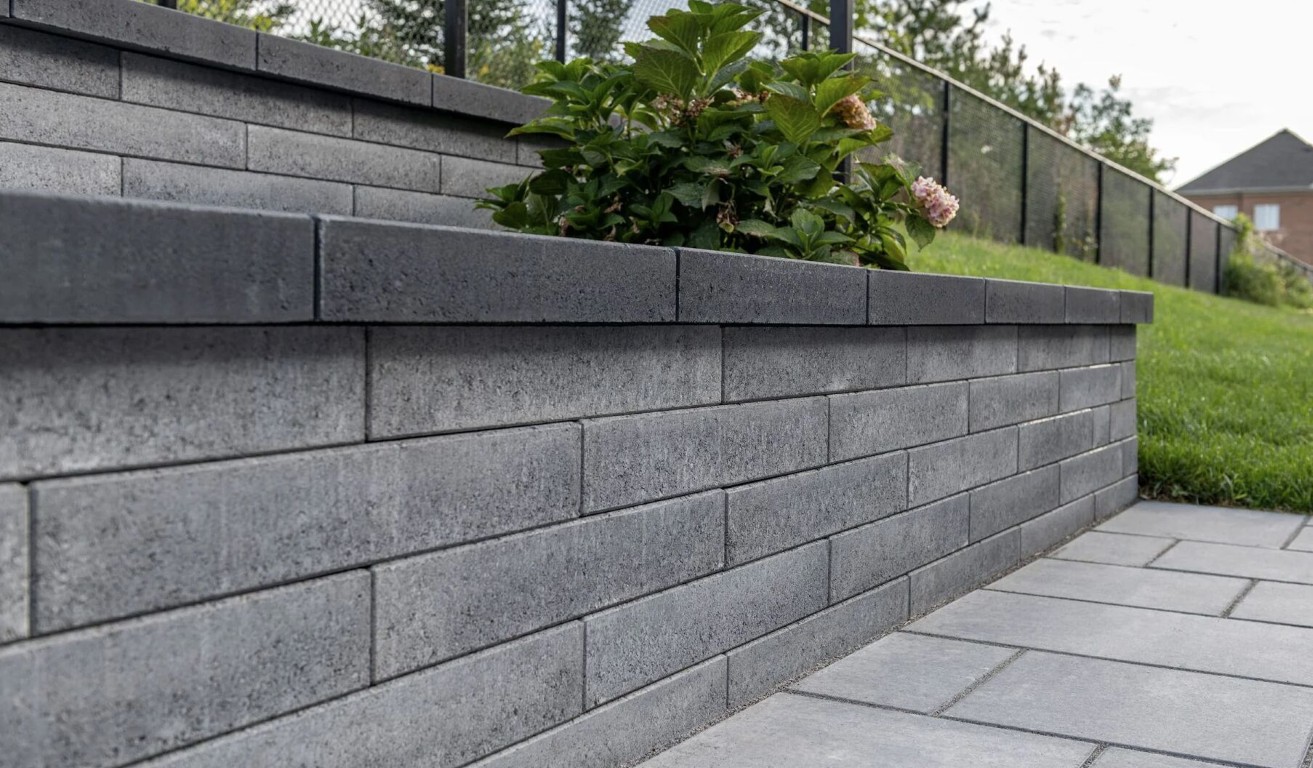
- Concrete Block Walls: These use interlocking masonry blocks that stack together. They work well for walls up to 4 or 5 feet tall and come in colors and textures that look like natural stone.
- Poured Concrete Walls: For taller walls or heavy soil loads, we pour reinforced concrete. This creates the strongest option and lasts the longest, though it costs more upfront.
- Stone Veneer Walls: We can face concrete walls with natural stone or manufactured stone veneer. This gives you the strength of concrete with the appearance of stacked stone.
- Segmental Walls: These smaller decorative walls work great for planters, low garden borders, or tiered landscaping. They typically do not need engineering but still require proper base preparation.
We help you choose the right type based on your specific site conditions. Walls over a certain height need engineering and permits, which we handle for you as part of the project.
What Makes a Retaining Wall Hold Up
The difference between retaining walls that fail within a few years and those that last decades comes down to proper engineering and installation. Thousands of pounds of wet soil push against these walls during every rainstorm, and shortcuts show up fast.
How We Build Lasting Retaining Walls
We start with the foundation. Every retaining wall needs a solid base below the frost line and soil level. We excavate deeper than the visible wall, pour a concrete footing, and make sure it is level and properly sized for the wall height. This foundation does most of the work holding everything in place.
Drainage is critical and often skipped by contractors trying to save money. Water buildup behind a wall creates pressure that eventually pushes it over or cracks it apart. We install drain pipes at the base, use gravel backfill that lets water flow through, and add weep holes so moisture escapes instead of building up. This drainage system costs extra but prevents expensive failures down the road.
For taller walls, we add reinforcement with rebar or geogrid depending on soil conditions. Walls over 4 feet almost always need engineering to calculate proper reinforcement and ensure safety. We work with local engineers who understand Central Coast soil and provide stamped plans that satisfy building departments. Like our foundation work, every detail matters for long-term performance.